Business & Branding
Music, Licensing and Who Owns the Footage
August 18, 20266 min read32 Productions · Douglas, GA
Two questions come up on nearly every commercial video project and both get handled badly when nobody raises them: what music can we use, and who owns what afterward.
You cannot use popular music
This is the one clients most often push back on. A commercially released song requires licensing rights that are expensive and generally out of reach for a small business video, and using it without them exposes you to takedowns and worse.
It is not about whether you will get caught. Platforms detect it automatically, and the video gets muted, blocked or claimed — usually right when the campaign is running.
What you use instead
Licensed production music from libraries designed for this purpose. The catalogs are large, the quality is high, and the license is clear about where the track can be used.
The important part is that the license matches the use. A license for organic social use does not necessarily cover paid advertising or broadcast, and licenses have terms about territory and duration.
Ask what the license covers
- Where the video can run — web, social, paid ads, broadcast, in-venue
- For how long
- In what territory
- Whether it transfers if you re-edit or repurpose the footage later
- Whether it covers derivative cuts and versions
Ownership of the finished video
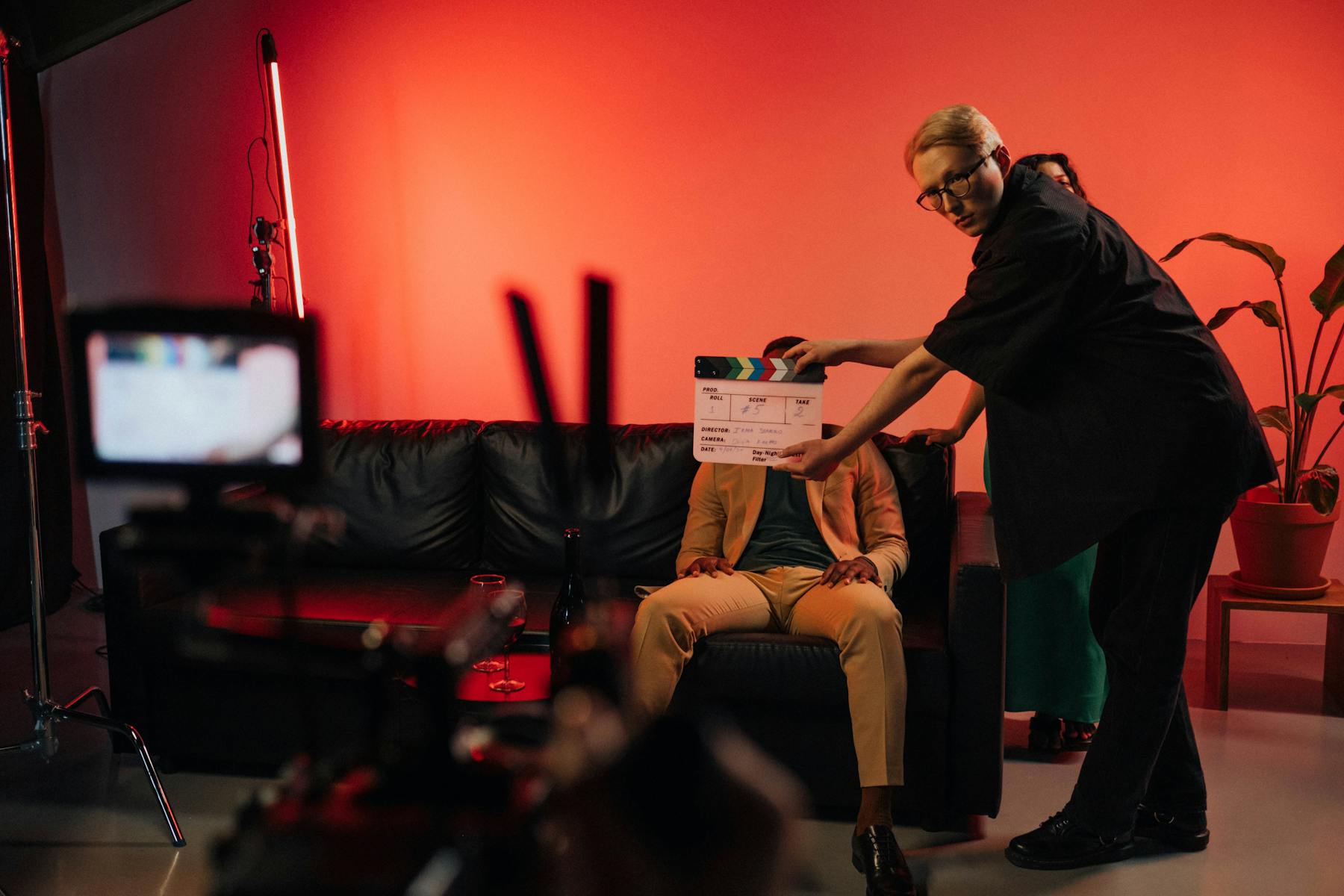
Clarify in writing what you receive. Typically a client receives the finished deliverables with rights to use them as agreed. Raw footage and project files are a separate question and are frequently not included by default.
Neither arrangement is wrong. What causes problems is assuming.
If you think you may want to re-edit the footage in two years, or hand it to a different editor, negotiate that at the start. Asking for raw files afterward is a different conversation than agreeing it up front.
People in the frame
Anybody recognizable in a commercial video generally needs to have agreed to that use. On a shoot involving employees, customers or the public, releases are how that gets documented.
This matters more than people expect for footage shot at events or in public-facing businesses. It also matters for minors, which has its own requirements.
Your own brand assets
Provide logos in usable formats, brand colors, fonts and any brand guidelines at the start. A production working from a logo pulled off a website at low resolution produces a video that looks it.
If your brand assets do not exist in usable form, that is worth fixing before the video rather than during it.
Stock footage
Same principle. Licensed stock is legitimate and useful for shots that are impractical to capture. Footage pulled from the internet is not licensed and using it creates the same exposure as unlicensed music.
32 Productions handles licensing properly on every commercial project and puts the usage terms in writing. Call (912) 592-3376.
Ready to shoot?
Let’s make it happen
32 Productions covers photography, videography, weddings, events and business content across Douglas, Coffee County and South Georgia. Tell us what you have in mind.